You want to perform better at work without feeling overwhelmed, burned out, or constantly behind schedule. Improving productivity at work requires practical systems, focused habits, and realistic strategies that help you stay consistent under pressure. When you apply the right techniques, you gain control over your time, improve output quality, and feel more confident about your daily progress.
Set Clear Priorities Before You Start Your Day
You improve productivity at work when you clearly define what matters most before distractions take over. Starting each day with prioritized tasks helps you focus on outcomes instead of reacting to emails, messages, and interruptions. Clear priorities reduce decision fatigue and make it easier to complete meaningful work consistently.
When you structure your tasks using time awareness, tools like understanding how a countdown system works for focus sessions can help you plan deep work blocks more effectively, as explained in this guide on what is a countdown timer: https://20minutetimer.com/what-is-a-countdown-timer/. This approach keeps your attention anchored on one task instead of multitasking across multiple demands. Prioritization works best when combined with realistic time estimates and intentional scheduling.
Use Time Blocking to Control Your Schedule
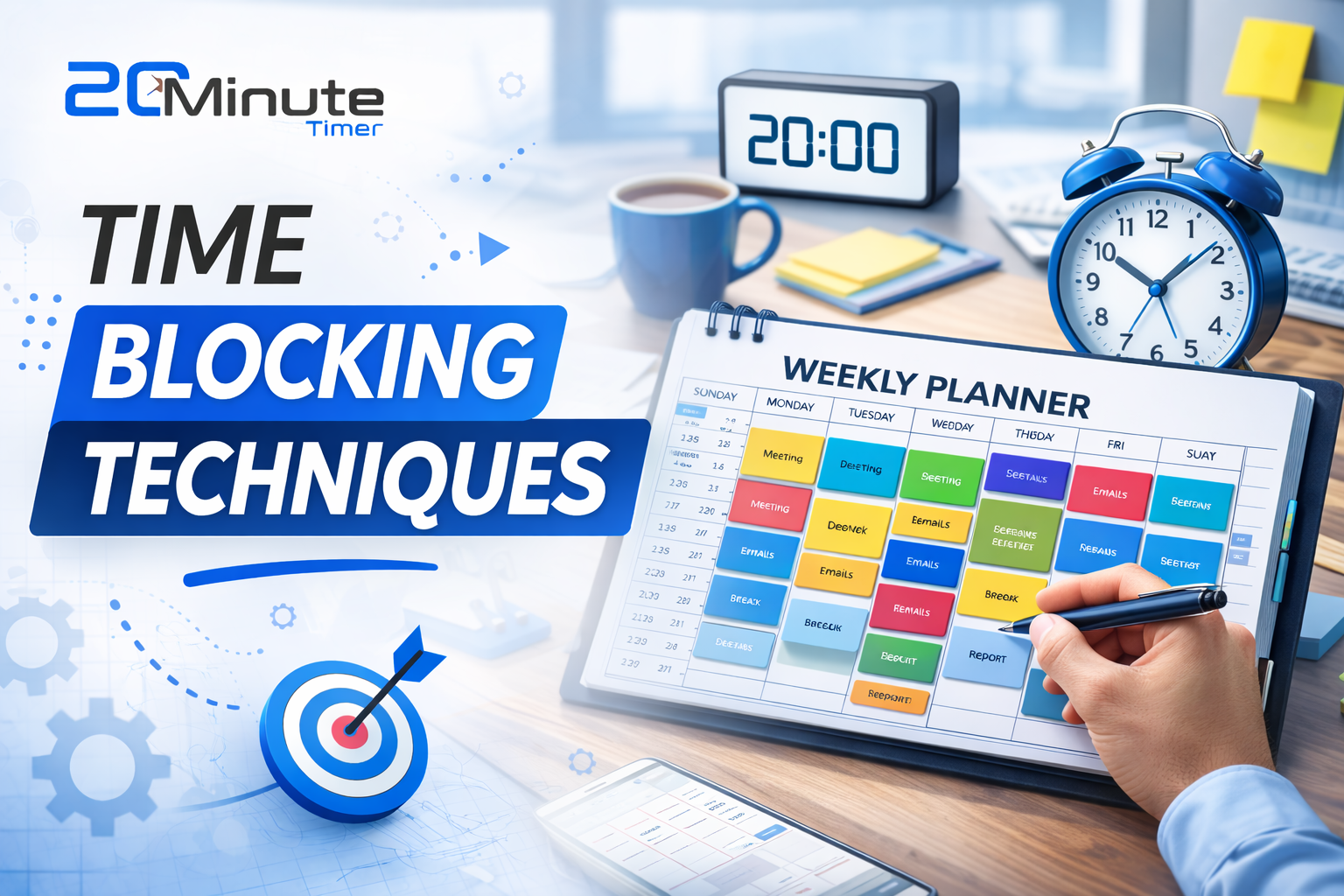
Time blocking allows you to assign specific tasks to specific periods, preventing your day from becoming reactive. When you reserve blocks for focused work, meetings, and breaks, you reduce wasted time and maintain mental clarity. This method helps you protect high-value tasks from interruptions and unnecessary context switching.
If you often wonder how long tasks will actually take, tools that answer questions like what time will it be in 20 minutes can help you visualize task duration more clearly, as shown here: https://20minutetimer.com/what-time-will-it-be-in-20-minutes/. Time blocking works best when you respect start and stop times instead of letting tasks expand endlessly. Consistent scheduling builds discipline and improves long-term productivity.
Eliminate Distractions That Break Focus
Distractions significantly reduce productivity by interrupting concentration and increasing task completion time. Each interruption forces your brain to refocus, which can take several minutes before full concentration returns. Removing distractions creates a work environment that supports deep focus and efficient execution.
You can improve focus by silencing notifications, closing unused tabs, and defining clear boundaries during work sessions. Using structured timers helps you stay committed to single-task focus without checking the clock repeatedly. Focus improves when your environment supports intentional work instead of constant stimulation.
Break Large Tasks Into Manageable Steps
Large tasks often feel overwhelming because they lack clear starting points. Breaking complex projects into smaller actions makes progress measurable and reduces procrastination. Small wins build momentum and increase confidence throughout the workday.
When tasks feel more approachable, you maintain motivation and avoid unnecessary delays. This approach also makes it easier to estimate time accurately and schedule work blocks effectively. Productivity increases when progress feels achievable rather than intimidating.
Take Strategic Breaks to Maintain Energy
Working nonstop reduces mental performance and increases error rates. Strategic breaks allow your brain to recover and maintain high-quality focus throughout the day. Short pauses improve creativity, memory retention, and overall work efficiency.
Techniques like focused work intervals followed by short breaks are supported by productivity research. Using tools that explain what options do you get when you search timer can help you choose the right structure for your workflow, as outlined here: https://20minutetimer.com/what-options-do-you-get-when-you-search-timer/. Breaks work best when they are intentional and distraction-free rather than unstructured scrolling sessions.
Improve Communication to Reduce Rework
Poor communication leads to misunderstandings, repeated work, and unnecessary revisions. Clear instructions and expectations prevent wasted effort and improve collaboration outcomes. Productivity improves when everyone understands goals, responsibilities, and deadlines.
You benefit from documenting decisions, confirming next steps, and reducing reliance on vague instructions. Clear communication minimizes follow-up questions and delays. Efficient collaboration saves time and improves overall work quality.
Automate Repetitive Tasks Where Possible
Repetitive tasks consume valuable time that could be spent on higher-impact work. Automation reduces manual effort and lowers the risk of human error. Even small automations can create significant productivity gains over time.
You can automate reminders, file organization, and routine scheduling to free mental energy. Productivity improves when your systems handle predictable tasks consistently. Automation allows you to focus on creative and strategic responsibilities instead of repetitive processes.
Optimize Your Work Environment for Performance
Your physical and digital environment directly affects focus and efficiency. A cluttered workspace increases stress and reduces concentration. Organizing tools, files, and physical space supports faster task execution.
You benefit from ergonomic seating, proper lighting, and organized digital folders. Small environmental adjustments can significantly improve comfort and focus. A supportive workspace reduces friction and improves daily productivity consistency.
Set Boundaries to Protect Deep Work Time
Constant availability prevents deep focus and meaningful progress. Setting boundaries helps you protect uninterrupted work sessions. Productivity increases when you define clear availability windows for communication.
You can communicate expectations around response times and meeting schedules. Boundaries allow you to work intentionally without constant interruptions. Respecting your focus time improves output quality and reduces stress.
Track Progress and Adjust Weekly
Tracking progress helps you identify what works and what needs improvement. Weekly reviews provide insights into time usage, task completion, and bottlenecks. Adjusting strategies based on data leads to continuous productivity improvement.
You improve productivity when you refine systems instead of repeating ineffective habits. Reflection allows you to optimize schedules and priorities proactively. Small weekly improvements compound into long-term performance gains.
Maintain Healthy Habits That Support Focus
Productivity depends on mental and physical well-being. Sleep, nutrition, and hydration directly influence cognitive performance and decision-making. Healthy habits sustain energy levels throughout the workday.
You perform better when your body supports your mental demands. Consistent routines improve resilience and concentration. Productivity becomes sustainable when supported by healthy daily habits.
Conclusion
Improving productivity at work requires intentional systems, focused habits, and realistic expectations that support consistent performance. When you prioritize tasks, manage time effectively, reduce distractions, and protect focus, you gain control over your workday.
Applying these proven strategies helps you work smarter, maintain energy, and achieve meaningful progress without burnout.
FAQs
How can you improve productivity at work without working longer hours?
You improve productivity by prioritizing high-impact tasks, reducing distractions, and using structured time management techniques like time blocking. Focusing on outcomes instead of hours worked helps you produce better results while maintaining energy and work-life balance.
What are the most effective daily habits for improving productivity at work?
Effective habits include planning your day in advance, setting clear priorities, taking short focused breaks, and minimizing interruptions. Consistent routines help you stay organized, reduce decision fatigue, and maintain steady productivity throughout the workday.
Why is task prioritization important for workplace productivity?
Task prioritization ensures you spend time on work that delivers the greatest value. By identifying urgent and important tasks first, you reduce stress, avoid last-minute rushes, and make consistent progress toward meaningful goals at work.
How does time management affect productivity at work?
Strong time management helps you allocate attention intentionally instead of reacting to distractions. When you schedule tasks realistically and respect start and end times, you improve focus, reduce wasted time, and complete work more efficiently.
Can reducing distractions really improve productivity at work?
Yes, reducing distractions significantly improves productivity by allowing deeper focus. Fewer interruptions mean less time lost to refocusing, higher work quality, and faster task completion, especially for complex or cognitively demanding responsibilities.
How do breaks contribute to better productivity at work?
Strategic breaks prevent mental fatigue and help maintain concentration over long periods. Short, intentional breaks improve memory, creativity, and energy levels, allowing you to return to tasks with renewed focus and improved performance.
What role does communication play in improving productivity at work?
Clear communication reduces misunderstandings, rework, and delays. When expectations, deadlines, and responsibilities are well defined, teams collaborate more efficiently and spend less time correcting errors or clarifying instructions.
How can technology help improve productivity at work?
Technology improves productivity by automating repetitive tasks, organizing information, and supporting focused work sessions. When used intentionally, digital tools reduce manual effort and free time for higher-value, strategic, or creative work.
Why is setting boundaries important for workplace productivity?
Setting boundaries protects uninterrupted work time and prevents constant task switching. By defining availability and response expectations, you create space for deep focus, reduce stress, and improve the overall quality of your work output.
How does maintaining healthy habits support productivity at work?
Healthy habits like adequate sleep, proper nutrition, and regular movement support cognitive performance. When your body is well supported, you maintain focus longer, make better decisions, and sustain productivity throughout demanding workdays.