You face constant distractions at work, school, and even at home, which makes staying focused harder than ever in the modern digital world. When you understand how does the Pomodoro technique work, you gain a simple yet powerful structure that helps you control your time instead of reacting to interruptions.
This method breaks work into focused sessions with planned breaks, allowing you to stay productive without mental exhaustion while building sustainable focus habits over time.
What the Pomodoro Technique Is and Why It Matters
You use the Pomodoro Technique as a time management system built around short, focused work sessions followed by intentional breaks. The technique matters because it aligns with how your brain naturally sustains attention before fatigue sets in. By structuring your work this way, you avoid burnout while improving consistency and output quality.
You focus on one task at a time instead of multitasking, which research shows can reduce productivity by up to 40 percent. The Pomodoro approach encourages deep work by limiting distractions and assigning a clear start and stop time. This structure helps you regain control over your schedule rather than feeling overwhelmed by long to do lists.
The method works especially well in the United States where remote work and digital notifications constantly interrupt attention. You benefit from clear boundaries that separate work time from rest time. This balance supports both productivity and long term mental health.
The Origin and Philosophy Behind the Pomodoro Technique
You trace the Pomodoro Technique back to Francesco Cirillo, who developed it in the late 1980s while studying in Italy. He used a tomato shaped kitchen timer to track short bursts of focused work. The philosophy centers on respecting time as a finite resource that deserves structure.
You work with time instead of fighting it, which reduces anxiety around large projects. The method emphasizes progress through repetition rather than perfection. Each completed session becomes a measurable win that builds momentum.
This philosophy fits modern American work culture where productivity often gets confused with constant availability. The Pomodoro Technique helps you shift toward intentional focus. You learn to value quality attention over long, unfocused hours.
How a Single Pomodoro Session Works Step by Step
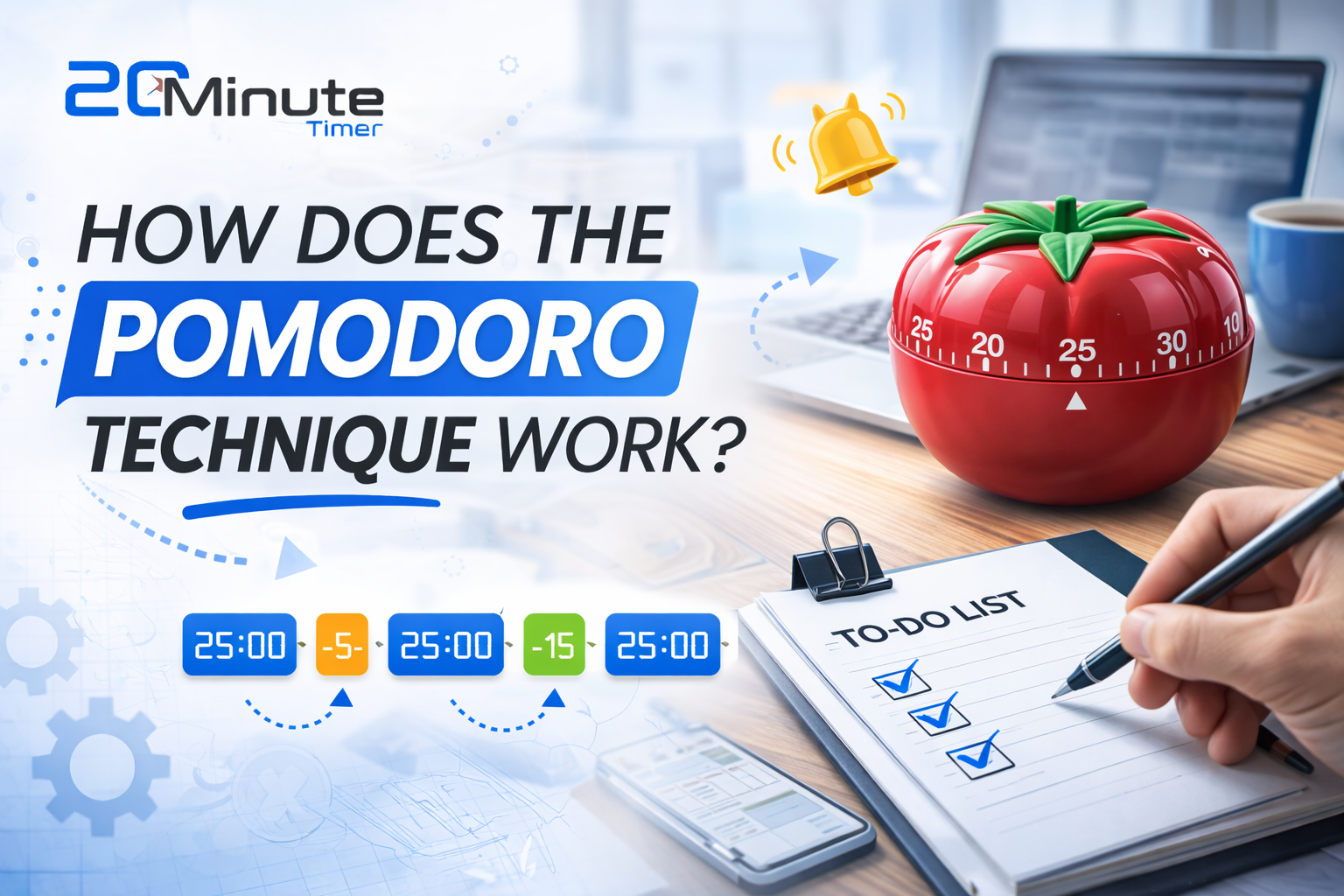
You begin a Pomodoro session by choosing one clear task you want to complete. You set a timer for 25 minutes and work on that task without interruptions. When the timer rings, you stop immediately and take a short break.
During this focused session, you avoid checking email, social media, or messages. If a distraction comes up, you note it and return to the task. This discipline trains your brain to stay engaged for short, manageable periods.
If you want to understand timers better, learning what is a countdown timer can help you appreciate why fixed time limits improve focus and urgency. You use the countdown to create a sense of commitment. The timer becomes a psychological contract with yourself.
The Role of Short Breaks in Maintaining Focus
You take a five minute break after each Pomodoro to allow your brain to recover. These breaks prevent mental fatigue and help consolidate what you just worked on. Short breaks also reduce the temptation to quit early.
You step away from screens during breaks to maximize recovery. Stretching, walking, or deep breathing works better than scrolling social media. The goal is mental reset, not replacement distraction.
Studies show that structured breaks improve sustained attention more than self regulated breaks. You maintain higher performance across the day by respecting recovery time. This balance keeps you productive without draining your energy.
How Long Breaks Reinforce Productivity Cycles
You take a longer break after completing four Pomodoro sessions in a row. This break usually lasts between 15 and 30 minutes. Long breaks help restore mental clarity and prevent cumulative fatigue.
You use this time to eat, move, or step outside if possible. These actions support cognitive recovery and emotional balance. Long breaks also help your brain transition between different types of work.
In American work environments where long hours are common, these extended breaks protect against burnout. You return to work feeling refreshed instead of depleted. This cycle supports consistent daily productivity.
Why the Pomodoro Technique Reduces Procrastination
You reduce procrastination by making tasks feel smaller and less intimidating. Committing to 25 minutes feels achievable even when motivation is low. This approach lowers resistance and helps you start.
Once you begin, momentum often carries you forward naturally. The technique removes the pressure to finish everything at once. You focus only on completing the current session.
When you understand what options you get when you search timer, you see how modern timer tools support different productivity styles and Pomodoro workflows. You can choose tools that fit your habits instead of forcing rigid systems. This flexibility makes it easier to stay consistent.
How Tracking Pomodoros Improves Time Awareness
You track completed Pomodoro sessions to measure how you actually spend your time. This tracking reveals patterns in focus, energy, and productivity. Over time, you learn how long tasks truly take.
You gain better planning accuracy by reviewing your sessions regularly. This insight helps you estimate future projects more realistically. Improved time awareness reduces stress and missed deadlines.
Data driven productivity matters in competitive U.S. workplaces. You can use Pomodoro tracking to justify workloads and set boundaries. This clarity supports both performance and well being.
Adapting the Pomodoro Technique to Different Work Styles
You adjust Pomodoro intervals to fit your energy levels and job requirements. Some people work best with 30 or 45 minute sessions instead of 25. The key is maintaining focused work followed by intentional breaks.
Creative professionals may extend sessions for flow based tasks. Analytical work may benefit from shorter, more frequent breaks. You tailor the structure without losing the core principles.
Flexible timing still relies on discipline and boundaries. You protect focus by committing fully to each session. Adaptation improves sustainability without sacrificing results.
Common Mistakes That Reduce Pomodoro Effectiveness
You weaken the technique when you ignore breaks or extend sessions repeatedly. Skipping breaks leads to fatigue and reduced concentration. The system only works when both work and rest are respected.
You also reduce effectiveness by multitasking during sessions. Switching tasks breaks focus and increases cognitive load. The Pomodoro Technique requires single task commitment.
Another mistake involves using breaks for digital distractions. Social media undermines recovery and focus. You protect results by choosing restorative break activities.
Using Technology to Support Pomodoro Practice
You can use physical timers, mobile apps, or browser extensions to manage sessions. Digital tools often include tracking, analytics, and reminders. These features help reinforce consistency.
You choose tools that minimize friction and distractions. Simplicity often works better than complex dashboards. The best tool is the one you actually use daily.
Technology supports but does not replace discipline. You still commit to focused work and intentional rest. Tools simply make the process easier to maintain.
Conclusion
You now understand how does the Pomodoro technique work and why it remains one of the most effective time management methods available today. By structuring work into focused sessions with planned breaks, you protect attention, reduce burnout, and improve consistency across tasks.
When you apply this method thoughtfully and adapt it to your workflow, you gain control over your time and build sustainable productivity habits that support long term success.
FAQs
How does the Pomodoro technique work in simple terms
You work for 25 minutes on a single task, then take a 5 minute break, repeating this cycle four times before taking a longer break. This structure helps you stay focused, reduce fatigue, and maintain steady productivity throughout the day.
Why is the Pomodoro technique effective for focus
The Pomodoro technique works because your brain performs best in short, focused bursts. By limiting work time and scheduling breaks, you reduce mental overload, improve concentration, and avoid the burnout that often comes from long, uninterrupted work sessions.
Can you adjust Pomodoro time intervals
Yes, you can adjust Pomodoro intervals based on your energy levels and task type. While 25 minutes is standard, many people use 30 or 45 minute sessions, as long as focused work and intentional breaks remain consistent and balanced.
Is the Pomodoro technique good for studying
The Pomodoro technique is highly effective for studying because it breaks large topics into manageable sessions. You stay mentally fresh, retain information better, and reduce procrastination by committing to short, structured study periods instead of marathon sessions.
Does the Pomodoro technique help with procrastination
Yes, it reduces procrastination by lowering the mental barrier to starting work. Committing to just one short session feels achievable, builds momentum, and often leads you to continue working once initial resistance disappears.
What should you do during Pomodoro breaks
During breaks, you should step away from screens and mentally reset. Light stretching, walking, hydration, or deep breathing work best, as they help restore focus and energy instead of replacing work stress with digital distractions.
How many Pomodoro sessions should you do per day
The number depends on your workload and energy, but most people complete between 8 and 16 Pomodoros daily. Tracking sessions helps you understand your limits and plan realistic schedules without pushing yourself into exhaustion.
Can the Pomodoro technique be used for work and personal tasks
Yes, the Pomodoro technique works well for both professional and personal tasks. You can use it for writing, coding, studying, cleaning, or planning, as the structure helps you stay focused regardless of the task type.
Do you need special tools for the Pomodoro technique
No special tools are required to use the Pomodoro technique. A simple timer, phone, or basic app is enough, as the effectiveness comes from consistent focus and breaks rather than complex software or advanced features.
What are common mistakes when using the Pomodoro technique
Common mistakes include skipping breaks, multitasking during sessions, and extending work periods too often. These habits reduce effectiveness, increase fatigue, and undermine the structure that makes the Pomodoro technique effective for sustained productivity.