Time blocking techniques help you take control of your day by assigning specific tasks to specific time periods instead of reacting to distractions. When you use time blocking correctly, you create structure, protect your focus, and reduce the stress that comes from constantly switching between tasks.
This guide walks you through practical, proven time blocking techniques you can use in the work environment to plan better days, stay productive, and consistently finish what matters most.
What Time Blocking Techniques Really Mean
Time blocking techniques refer to scheduling your day into defined blocks of time where each block has a clear purpose. Instead of working from an open-ended to-do list, you decide in advance when you will work on specific tasks, projects, or responsibilities. This approach helps you see time as a limited resource and use it intentionally rather than letting distractions dictate your schedule.
When you use time blocking, you gain awareness of how long tasks actually take. That awareness helps you plan realistically and avoid overloading your day with impossible expectations. Over time, you begin to trust your schedule because it reflects how you truly work, not how you wish you worked.
Why Time Blocking Techniques Improve Focus
Time blocking techniques improve focus by reducing context switching, which is one of the biggest productivity killers. Every time you jump from one task to another, your brain needs time to refocus, and that mental cost adds up quickly. By dedicating a block of time to one type of work, you give your attention a clear target.
Focused blocks also make it easier to say no to interruptions. When your calendar shows a protected work block, you are less likely to respond to emails or messages impulsively. This boundary helps you work deeply and finish tasks faster with better quality.
Planning Your Day With Fixed Time Blocks
Fixed time blocks are the foundation of most time blocking techniques. You start by identifying your non-negotiable commitments, such as meetings, work hours, and personal responsibilities. Once those are in place, you fill the remaining time with blocks for focused work, administrative tasks, and breaks.
This method works best when you plan your day the night before or early in the morning. Seeing your entire day mapped out gives you clarity and reduces decision fatigue. If you need help understanding how short focused sessions fit into your schedule, tools like a 20-minute productivity timer can support consistent, distraction-free work blocks.
Task Batching as a Time Blocking Technique
Task batching is a powerful time blocking technique where you group similar tasks into one block. Instead of checking email all day, you assign one or two specific blocks for email and communication. This keeps small tasks from interrupting your deeper work.
Batching works especially well for repetitive or low-energy tasks. When you handle similar tasks together, your brain stays in the same mode, which saves mental energy. Over time, task batching makes your day feel smoother and more controlled.
Using Time Boxing to Control Work Duration
Time boxing is a variation of time blocking that sets a strict time limit for a task. Instead of working until something feels finished, you work until the time box ends. This technique helps prevent perfectionism and keeps tasks from expanding unnecessarily.
Time boxing is effective for projects that tend to drag on. It encourages progress over perfection and helps you maintain momentum throughout the day. If you ever wonder exactly how long a short work session lasts, understanding what time it will be in 20 minutes can help you commit to focused, time-limited work blocks.
Protecting Deep Work With Focused Blocks
Deep work blocks are reserved for tasks that require concentration, creativity, or problem-solving. These blocks should be scheduled during your most productive hours, which for many people in the USA is mid-morning. Protecting these blocks is essential if you want to make meaningful progress on important projects.
To protect deep work, you need to minimize interruptions. That may include silencing notifications, closing unnecessary tabs, or letting coworkers know you are unavailable. When deep work becomes a regular part of your schedule, your overall output improves significantly.
Scheduling Shallow Work Without Losing Control
Shallow work includes tasks like email, data entry, scheduling, and routine updates. These tasks are necessary, but they should not dominate your day. Time blocking techniques help you contain shallow work within specific blocks so it does not spill into your focus time.
By scheduling shallow work intentionally, you reduce the urge to multitask. You also gain confidence knowing that these tasks have a dedicated place in your schedule. This balance keeps your day productive without feeling overwhelming.
Building Flexibility Into Your Time Blocking System
A common mistake with time blocking techniques is making schedules too rigid. Real life includes unexpected meetings, urgent requests, and energy fluctuations. To handle this, you should include buffer blocks in your schedule.
Buffer blocks act as flexible time that absorbs surprises without disrupting your entire day. They also give you room to adjust when tasks take longer than expected. Learning how different tools define timing, such as what a countdown timer is, can help you structure flexible yet controlled time blocks.
Weekly Time Blocking for Long-Term Planning
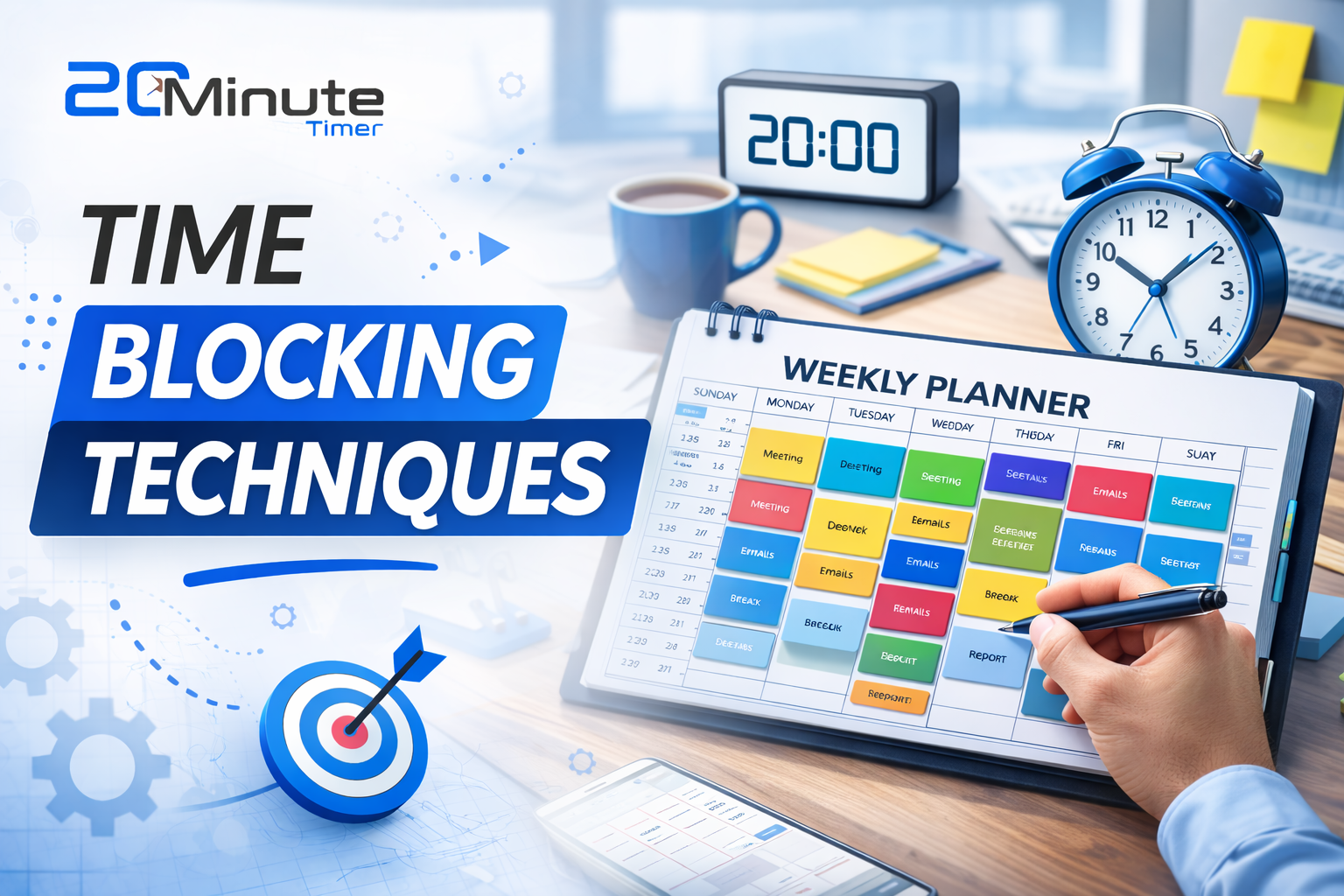
Weekly time blocking focuses on planning your week instead of just individual days. You assign themes or priorities to each day, such as meetings, creative work, or planning. This approach gives your week a clear structure and reduces daily decision-making.
Weekly planning also helps you align tasks with long-term goals. You can ensure that important projects receive consistent attention. Over time, weekly time blocking improves consistency and reduces last-minute stress.
Tools That Support Time Blocking Techniques
Digital calendars are the most common tools for time blocking. They allow you to visualize your schedule and adjust blocks as needed. Task management apps can also support time blocking by syncing tasks with calendar blocks.
Timers play an important role in reinforcing focus. Using a timer helps you stay committed to a block without constantly checking the clock. When you understand what options you get when you search for a timer, you can choose tools that fit your workflow and productivity style.
Measuring Success With Time Blocking Techniques
The success of time blocking techniques is measured by consistency, not perfection. You should regularly review how well your blocks match reality and make adjustments. This reflection helps you refine your schedule and improve accuracy.
Pay attention to how you feel at the end of the day. If you finish important work with less stress, your system is working. Over time, small improvements compound into better productivity and stronger time management habits.
Common Mistakes to Avoid When Time Blocking
One common mistake is overloading your schedule with too many blocks. This creates pressure and makes it harder to stay flexible. You should leave space for rest, transitions, and unexpected tasks.
Another mistake is ignoring energy levels. Scheduling demanding work during low-energy periods sets you up for frustration. Effective time blocking techniques respect both your time and your natural rhythms.
Conclusion
Time blocking techniques give you a practical way to control your schedule instead of reacting to it. By assigning purpose to your time, you reduce distractions, improve focus, and create space for meaningful work.
When you apply these techniques consistently, you build a system that supports productivity, balance, and long-term success without unnecessary stress.
FAQ
What are time blocking techniques and how do they work
Time blocking techniques help you plan your day by assigning specific tasks to dedicated time slots on your calendar. Instead of reacting to tasks as they appear, you decide in advance what to work on and when, improving focus and productivity.
Why are time blocking techniques effective for productivity
Time blocking techniques reduce distractions and context switching by encouraging you to focus on one task at a time. This structured approach helps you complete tasks faster, manage priorities better, and reduce stress caused by multitasking and constant interruptions.
How do you start using time blocking techniques correctly
You start by listing your tasks, estimating how long each will take, and placing them into specific time blocks on your calendar. Begin with high-priority work, include breaks, and adjust your blocks based on real performance and daily energy levels.
Can time blocking techniques work for busy schedules
Time blocking techniques work well for busy schedules because they help you control your time instead of reacting to demands. By planning blocks for focused work, meetings, and personal tasks, you create balance and reduce the feeling of being overwhelmed.
What is the difference between time blocking and time boxing
Time blocking focuses on scheduling when you will work on a task, while time boxing limits how long you will work on it. Both techniques improve focus, but time boxing is especially helpful for preventing tasks from taking longer than planned.
Are time blocking techniques suitable for remote work
Time blocking techniques are highly effective for remote work because they create structure in flexible environments. They help you separate work from personal time, reduce distractions at home, and ensure important tasks receive focused attention during the day.
How do time blocking techniques improve work-life balance
Time blocking techniques improve work-life balance by ensuring personal activities are scheduled alongside work tasks. When you block time for rest, exercise, and family, you protect personal time and prevent work from expanding into every part of your day.
What tools can help with time blocking techniques
Digital calendars, task management apps, and timers support time blocking techniques by helping you visualize your schedule and stay focused. These tools make it easier to adjust blocks, track time, and stay committed to your planned workflow.
How flexible should time blocking techniques be
Time blocking techniques should be flexible enough to handle unexpected tasks and changes. Adding buffer blocks and reviewing your schedule daily allows you to adapt without losing control, making your system realistic and sustainable long term.
How long does it take to see results from time blocking techniques
You can notice improvements within a few days of using time blocking techniques consistently. Over time, your estimates become more accurate, your focus improves, and you gain better control over your schedule and overall productivity.